

P.R.GLOlinks consulting acts as partners in innovating, building, transforming and renovating process and technology to achieve Sustained Excellence.

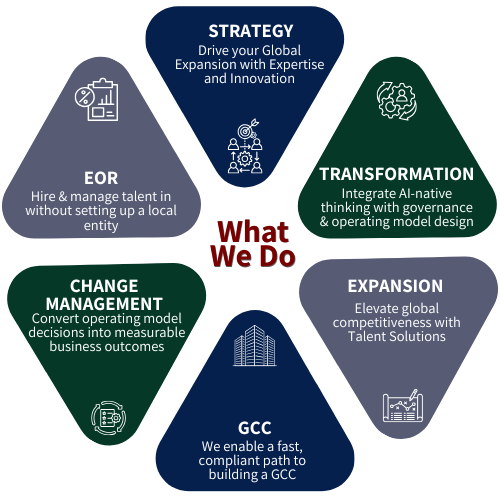
We enable global enterprises to expand into India and Asia through a structured Strategy → Transformation → Expansion approach.
As a knowledge house, powered by our Catalyst hub, we combine deep market insights with AI-led decision intelligence and execution expertise.
We advise on right-sourcing frameworks aligned to your growth ambition and risk strategy. From defining the right model, be it GCC, EOR, outsourcing, global talent acquisition, or M&A, to full execution, we ensure expansion is fast, compliant, AI-enabled and ESG-aligned, built for sustainable growth
We enable global enterprises to expand into India and Asia through a structured Strategy → Transformation → Expansion approach.
As a knowledge house, powered by our Catalyst hub, we combine deep market insights with AI-led decision intelligence and execution expertise.
We advise on right-sourcing frameworks aligned to your growth ambition and risk strategy. From defining the right model, be it GCC, EOR, outsourcing, global talent acquisition, or M&A, to full execution, we ensure expansion is fast, compliant, AI-enabled and ESG-aligned, built for sustainable growth
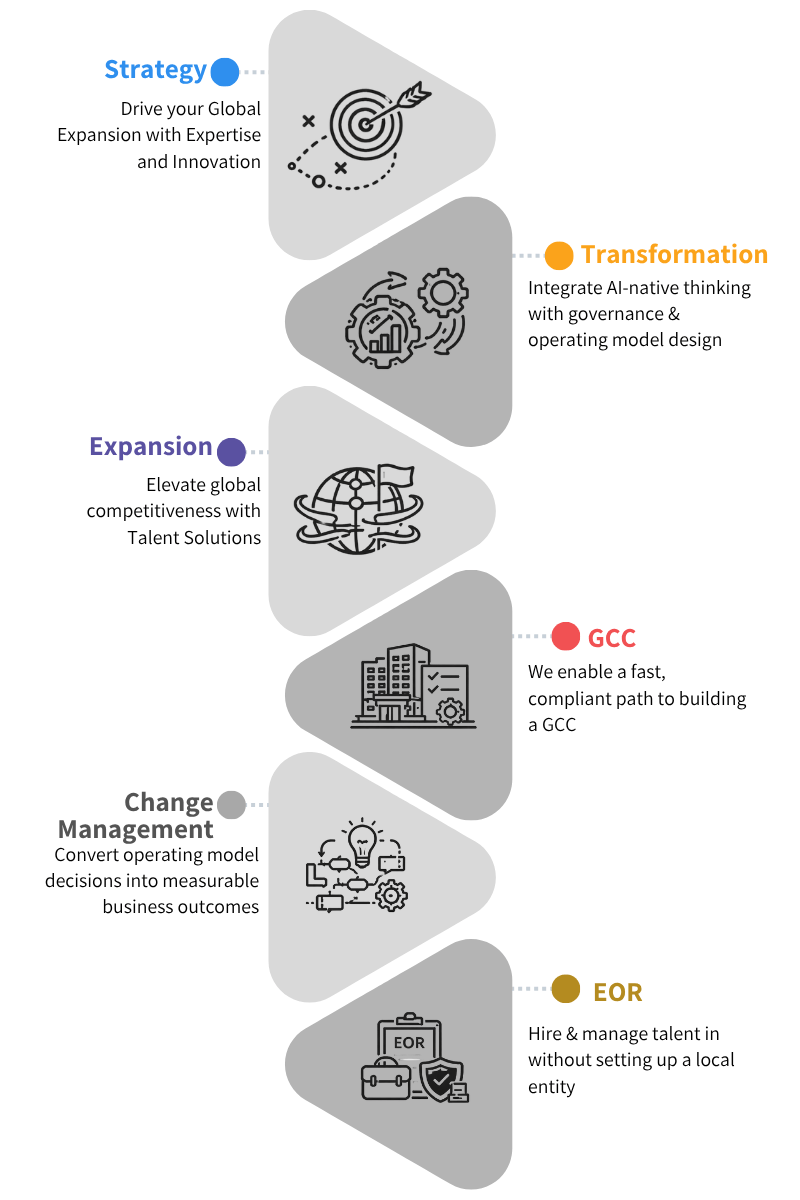
Drive your Global Expansion with Expertise and Innovation
By combining our world-class industry insights with cutting-edge technological expertise, we assist organizations in their global expansion efforts.
Integrate AI-native thinking with governance & operating model design
We support organizations to build intelligence-led frameworks that support scalable growth, ensure compliance and deliver measurable, future-ready outcomes.
Elevate global competitiveness with Talent Solutions
We assist in leveraging India's rich pool of talent to recruit skilled professionals who work remotely, ensuring agility, and cost-effectiveness.
We enable a fast, compliant path to building a GCC
To accelerate growth while maintaining control and quality, we provide the access to skilled talent, operational efficiency and the ability to work across time zone.
Converts operating model decisions into measurable business outcomes.
It ensures that expansion choices are not only implemented but embedded across the organization, enabling resilience, adoption and long-term value.
Hire & manage talent in without setting up a local entity
Ensure fast and compliant global expansion. We handle payroll, taxes, benefits and legal obligations end-to-end, allowing businesses to scale efficiently
"Pioneering Excellence: From Humble Beginnings to Global Impact"
Founded in 1999 as a humble individual enterprise named P.R. Enterprises, we transformed into P.R. GLO Links Consulting. Over the years, we have evolved into a prominent corporate group headquartered in India, with offices in the UK. We have successfully collaborated with multinational companies, startups, and individual clients worldwide.
"Our success is driven by our dedicated people, ethical practices, and an unwavering commitment to understanding client needs." We pride ourselves on maintaining professional procedures and having the courage to say 'NO' to what we cannot commit to.

We act as catalysts of renaissance, building and transforming organizations to achieve "Sustained Excellence."
By maintaining this focus, we continue to expand our impact and help our clients navigate an ever-changing global landscape.